


Water-centric Livelihoods
Water-centric livelihoods in rural areas are crucial for community well-being, providing essential income and food security. Activities like agriculture, aquaculture and small-scale irrigation rely on sustainable water management. Effective practices such as rainwater harvesting and efficient irrigation boost productivity and resilience against environmental challenges. These initiatives foster community cooperation, ensuring long- term water availability and ecological balance. By focussing on water-centric livelihoods, rural communities can achieve economic stability, environmental sustainability and improved quality of life.
Mor Jal Mor Maati (MJMM)
Major Achievements: The project focussed on building water resilience and promoting sustainable agriculture through integrated water resource development. A total of 25 farm ponds were constructed, creating a harvesting potential of 20,475 cubic metres. In addition, desiltation of a community pond restored 4,447.35 cubic metres of storage capacity, enhancing water availability for agriculture and fish farming.
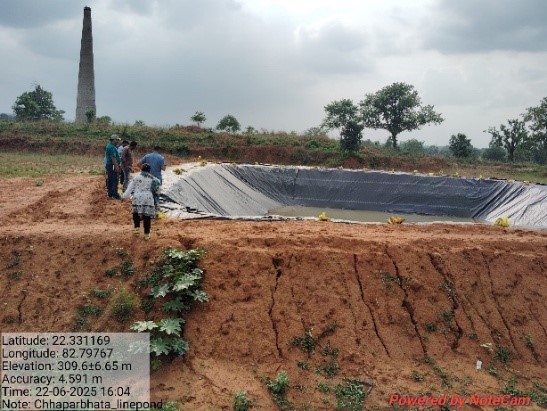
To further strengthen irrigation efficiency, two ponds were lined, securing 3,572 cubic metres of water for extended use. Forty-seven farmers adopted portable solar lift irrigation systems, reducing fuel costs and promoting clean energy, while 70 farmers were equipped with micro-irrigation systems, improving water use efficiency and increasing cropping intensity. Collectively, these interventions will create 28,494 cubic metres of additional water storage capacity and ensure improved irrigation for at least 115 acres of farmland
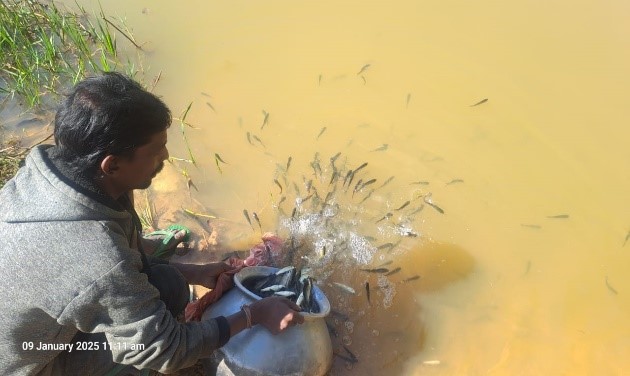
In parallel, pisciculture was introduced as a complementary livelihood, with support provided to 10 farmers across 6 villages. They were provided with Rohu and Catla fish seeds along with inputs like netting, training, and livelihood support to promote fish-based income opportunities
Basudha
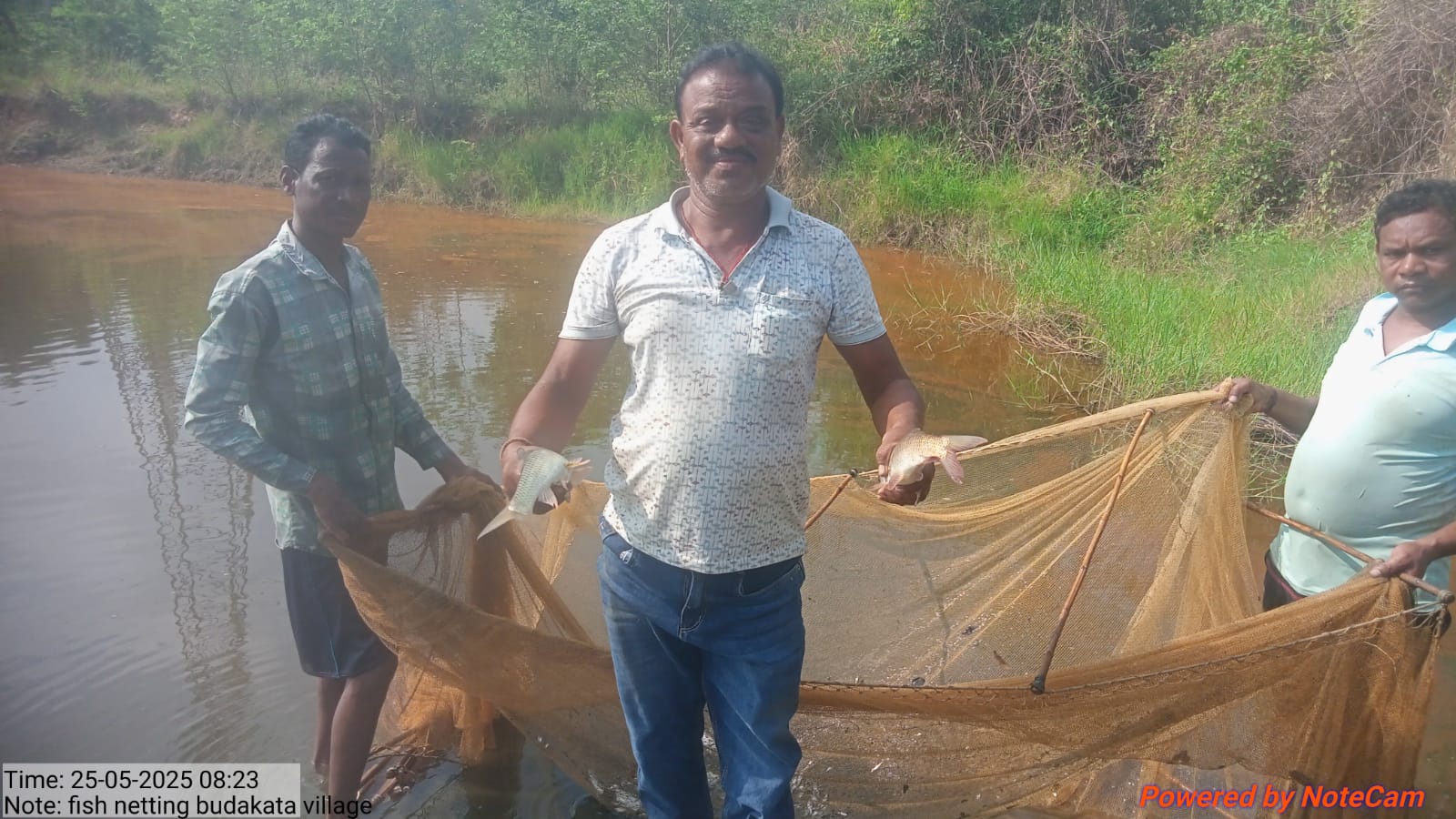
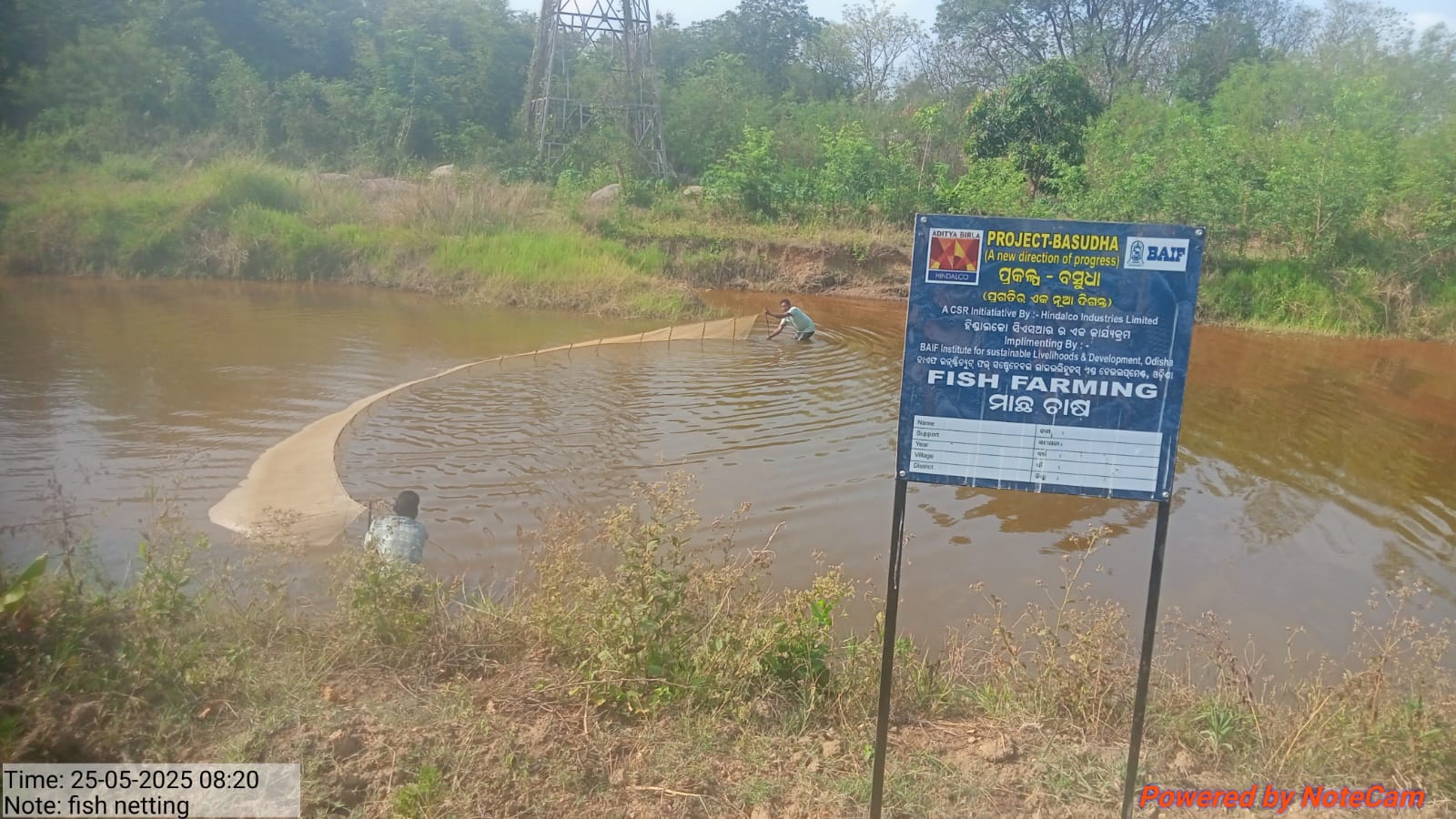
Major Achievements: The project initiated inland fish farming interventions in the Hirakud region of Sambalpur district to enhance water-centric livelihoods. In November 2024, five progressive farmers were selected and supported with the provision of approximately 2,400 quality fingerlings each, comprising Rohu, Catla, and Mrigal species. To enable sustainable production, feed support and fishing nets were also supported, complemented by hands-on training on scientific fish rearing practices. This initiative aims to harness underutilised water bodies for livelihood enhancement, with each pond expected to yield 500–600 kg of fish annually. The projected income of ₹70,000–80,000 per farmer per year not only supports household income but also encourages the adoption of integrated, water-based livelihood models in the region.
Holistic Cluster Development Programme (HCDP)
Sponsor: JSW Foundation
Location: Joda and Koira blocks in Keonjhar and Sundargarh districts respectively
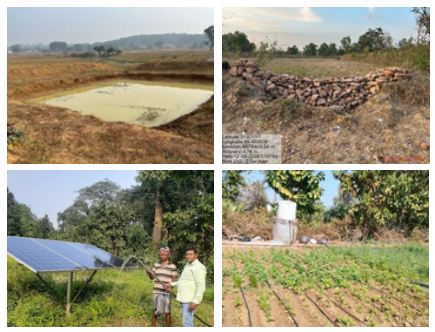
Major Achievements: The project covers 17 villages in the mining areas of JSW Steel in Keonjhar and Sundargarh districts and aims to improve water resources. During the project period, 16 farm ponds were constructed, creating a rainwater harvesting potential of over 10 TCM and bringing 16.06 acres of land under irrigation. These ponds have ensured reliable water availability for protective irrigation, enabling participating farmers to grow additional crops and increase their annual income by ₹22,500 per person. To further enhance water retention and soil productivity, field bunding was undertaken across 247.11 acres, supporting erosion control and nutrient retention for 40 farmers. In parallel, 10 solar lift irrigation systems were installed,offering year-round, cost-effective water access to 10 farmers while saving ₹12,500 annually per farmer in fuel costs. Increased irrigational efficiency was also achieved through the distribution of 48 water lifting devices, benefitting 48 farmers and enabling irrigation over 35.83 acres. Additionally, 20 drip/micro-irrigation units were adopted, covering 5 acres and improving water use efficiency by up to 35% compared to conventional methods. These combined efforts have strengthened climate-resilient farming, reduced dependency on rainfall, and diversified incomes for smallholder farmers across the region.
Comprehensive Community Development Programme-Utthan
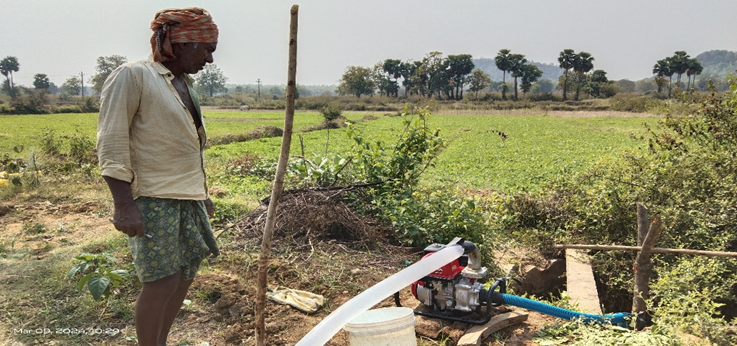
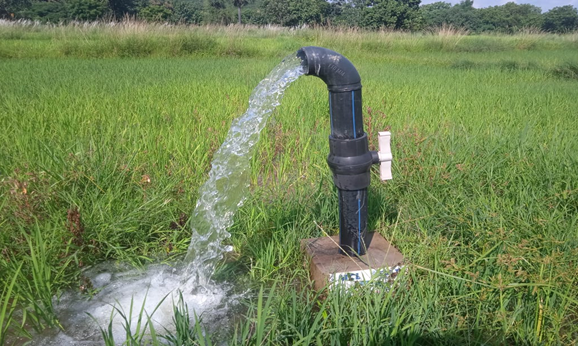
Major Achievements: The project is being implemented in 40 villages of Jharsuguda, Sundargarh, Sambalpur, and Angul districts, enhancing sustainable water use and agricultural livelihoods. This year, the project expanded its reach to 292 households, with focussed efforts on improving irrigation infrastructure, promoting micro-irrigation, and enhancing climate resilience. A cumulative 40 lakh litres of water harvesting potential has been created through the construction of 46 lined farm ponds, complemented by the renovation of 84 wells. A total of 181 water lifting devices and 450 micro-irrigation units have been distributed so far, enabling efficient water application across 114.90 acres, now fully under irrigation.
The project also encouraged sustainable agriculture through Integrated Vegetable Clusters (IVC), benefitting 1,793 households cumulatively, while promoting the cultivation of diverse seasonal crops such as paddy, bitter gourd, cucumber, and pumpkin. In FY 2024–25 alone, 779 families participated in vegetable cultivation-based livelihoods. The interventions led to a 150% increase in cropping intensity, and an average income rise of ₹20,000 per family, along with reduced carbon emissions (approx. 76.8 tons of CO₂) through the use of 14 solar- powered irrigation units generating nearly 70,000 kWh/year of clean energy. The adoption of trellis farming and soil-moisture conservation through farm bund-cum-trench work (over 247 acres) further strengthened the project’s sustainability goals.
Sustainable Agriculture for Alternative Livelihoods (SAFAL)
Major Achievements: With a focus on enhancing irrigation access and promoting sustainable agriculture, two farm ponds were constructed, creating a water harvesting capacity of 980 cubic metres. Additionally, 25 water lifting devices were distributed to local farmers, enabling efficient utilisation of water resources for crop cultivation.
The project actively supported horticulture and vegetable-based farming to improve household nutrition and income. A total of 124 households adopted vegetable cultivation, growing crops such as cauliflower, cabbage, bitter gourd, and ridge gourd. To maximise vertical space and improve yields, 50 households implemented trellis farming for vegetables like bitter gourd, ridge gourd, and cucumber. Further, 20 households initiated high-value papaya cultivation, marking a shift toward diversified and market-oriented farming. These efforts have collectively contributed to improved water management and sustainable agricultural livelihoods in the project villages.
A Pond of Possibilities – How One Intervention Transformed Farming in Paradeep
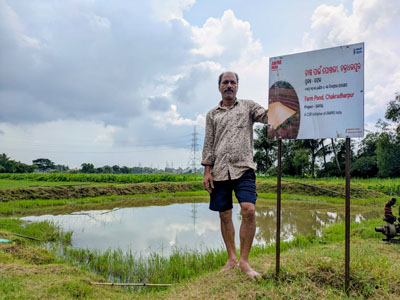
Mr. Pradeep Panda, a smallholder farmer from Chakradharpur village in Jagatsinghpur, struggled with seasonal water shortages, limiting his income from paddy and green gram to around ₹70,000 annually. Under the SAFAL project, a farm pond with 490 m³ capacity was constructed on his land in October 2024. The pond has ensured year-round irrigation, allowing him to improve crop productivity and plan for vegetable cultivation on the pond embankments. He also introduced fish farming by releasing 300 fingerlings, opening up a second income stream. Six neighbouring farmers now access water from the same pond, enabling rabi cultivation with protective irrigation facility available. This intervention has improved soil fertility, reduced rainfall dependency, and expanded livelihood options for him and his community, demonstrating how a single farm pond can drive sustainable, multi-layered impact in rural farming systems.
Focussed Rural Development Programme (FRDP)
Sponsor: HDFC Bank
Location: Jujomura, Naktideul and Rairakhol blocks of Sambalpur district of Odisha
Major Achievements: The focussed Rural Development programme (FRDP), supported by HDFC Bank and implemented across the blocks of Jujomura, Rairakhol, and Naktideul in Sambalpur district, continues to prioritise water-centric livelihoods as a pathway to rural resilience. In the reporting period, 286 farm ponds were constructed, significantly enhancing the region’s capacity for rainwater harvesting and enabling irrigation even during dry spells. A total of 355 water lifting devices were distributed to facilitate efficient use of harvested water. Additionally, the repairment of 185 wells played a critical role in improving water access, reducing drudgery, and promoting hygiene at the household level.
The programme also introduced 25 micro-irrigation units, including drip and sprinkler systems, to improve water use efficiency in farming. 50 solar-powered irrigation units were installed, aligning with sustainable energy goals and ensuring uninterrupted access to irrigation without reliance on conventional power sources.