
Climate-Smart Agriculture
CCDP, HCDP, SAFAL, FRDP, MJMM, BASUDHA
Major Achievements: To ensure agricultural sustainability, several innovative and resource-efficient techniques were introduced and scaled up.
- Trellis farming emerged as a key intervention, allowing climber vegetables like bottle gourd and long beans to thrive with better sunlight exposure, pest control, and minimal land usage.
- Polyhouse farming was promoted, with six polyhouses established to enable year-round cultivation of high-value crops like tomato and chilli.
- Improved vegetable cultivation benefitted over 1,000 farmers, covering crops like potato, tomato, brinjal, and okra. High-value horticulture models were piloted, including banana and papaya plantations, with convergence from horticulture departments.
- Paddy diversification and improved cultivation practices (including Rabi and Kharif seasons) reached more than 1,000 farmers, demonstrating yield increase and significant cost savings. Interventions also included distribution of spray pumps, biofertilisers, and nano urea, reducing labour and chemical costs.
- Nutrition Gardens were established with 50 households to promote balanced food intake. This initiative supported vegetable, fruit, and herbal diversity, and helped families save ₹6,000–₹8,000 annually on food expenses while enhancing women’s participation in homestead farming
- Climate-resilient agriculture was supported through the introduction of drought-, flood-, and saline- resilient paddy varieties, alongside improved millet-based farming systems. 200 acres of paddy were brought under Integrated Pest and Nutrient Management (IPM/INM), with yield increase, reduced chemical input, and lower cultivation costs.
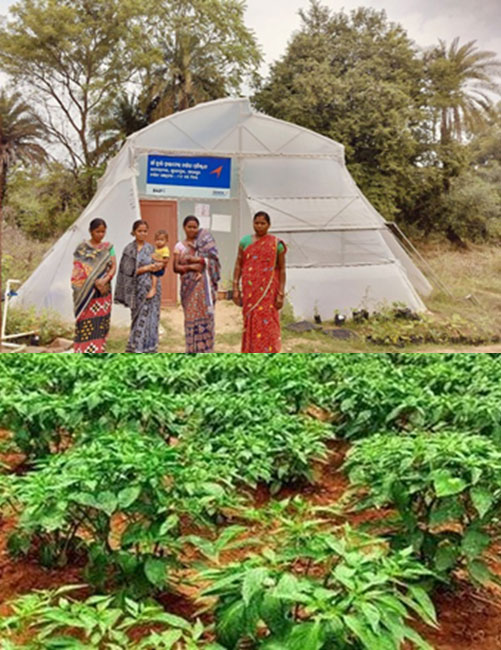
Across projects, over 150 farmers adopted climate-smart agriculture practices through structured capacity building and demonstration-based extension. These integrated efforts continue to position climate-smart agriculture as a core strategy for achieving resilient rural livelihoods.
Growing More with Less: Boosting Paddy Yields
In Paradeep, Jagatsinghpur district, the SAFAL project, implemented by BAIF with support from AM/NS India, has empowered 200 farmers across 10 villages to significantly improve their paddy productivity through scientific cultivation. With access to high-yielding seed varieties, organic seed treatments, fertilisers, and essential tools, farmers adopted improved package of practices. These interventions resulted in a remarkable 9.04% increase in yield, from 10 to 15 quintals per acre. With the market price of paddy at ₹20 per kg, farmers cultivating just 0.5 acres have seen their annual income grow by ₹40,000. The project also strengthened market linkages, enabling farmers to sell their produce through APMC markets and local rice mills.Building on this success, SAFAL plans to promote crop diversification, farmer collectives, improved irrigation, and training on integrated and organic practices, ensuring sustainable agricultural growth and long-term rural prosperity in coastal Odisha